Posted on

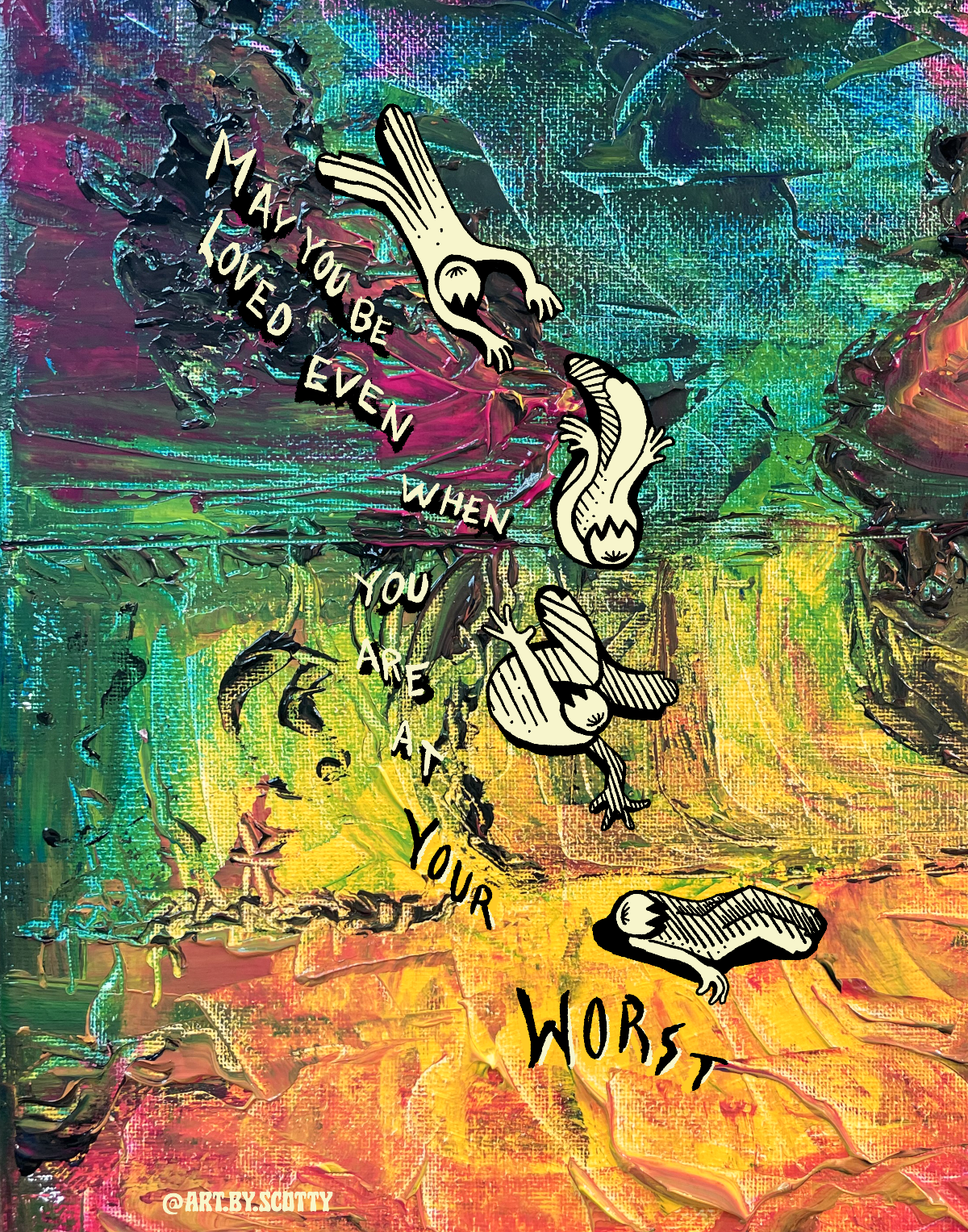
May You Be Loved At Your Worst

May you be loved

When my vision started to blacken I knew I wasn’t crazy, something was actually wrong. 

I was diagnosed with B6 toxicity last October. While developing the toxicity sucked, detoxing and the corresponding nerve healing was the worst experience of my life. 

I had developed neuropathy, damage to nerves, which can be sensory, motor, or autonomic. I had neuropathy of all three categories. I had been on a 200mg B6 supplement for about 7 years and all of the excess B6 had steadily absorbed itself into my muscles and nerves, eventually killing nerve cells across the whole body. Even 20mg daily for that length of time can cause toxicity in some people.

The detox was the worst. The first three weeks involved a myriad of symptoms including hallucinations, derealization and depersonalization, feeling like I was constantly waking up, nausea, difficulty speaking, delirium, intense tinnitus, crazy brain fog, and nervous system freak out mode to the point of paranoia, with a splash of hyper sensitivity to any sounds and visual stimulation. Also inability to regulate body temperature, chills, shakes, and full body twitching. Plus chest tightness, clenched stomach, bloating, soreness in the rib cage, pins and needles everywhere, muscle soreness… basically take any function of the nervous system and make it disregulated.

Then came the slow steady and sometimes backwards path to healing. B6 deadens the nerve cells, and as the B6 is removed and the nerve cells start to heal and regrow the numbness is replaced with pain and discomfort. While the intensity decreased, I had spells of the previously mentioned symptoms for about 8 months and then flare ups from there from time to time, with the last flare up being a couple of months ago, but some lingering tinnitus and some minor other symptoms that are manageable to deal with with still occurring.

Last night as I replayed this in my mind I could feel my body twitching in memory, and my ears ringing a chorus in response. Sometimes I completely forget about the toxicity because it is easier than remembering it, even though it was only months ago.

I was on intermittent disability for a year.

It was really hard to explain all of this to people because I looked fine on the outside and I had never heard of anyone else overdosing on vitamins. I was an otherwise healthy 37 year old man who had to lay down for naps throughout the day, sometimes just on the kitchen floor. Sometimes I felt at 80%, and other times I felt at 10% out of nowhere. I was powerless to do anything but let my body detox and heal.

I have a hard time asking for help, and I felt crazy explaining it to people – I could barely even track the symptoms myself there were so many. I logged a symptom journal for a year and it looked insane.

Anyhow, I have shared parts of this story with people close to me but most people probably didn’t even know I was going through anything. The mental toll was really rough, knowing there was no quicker path through. I suffered from anxiety and depression, both as side effects of the detox, and as a result of the difficulty. If you look at pictures of me one month and three months in you’d have no idea how much I was struggling (see slides 3 and 4). And I truly felt fine sometimes, especially if I stayed active. But there was always a crash, at least once a week for the first 4 months that lasted for days.

It made me feel useless and incompetent as a human a lot of the time. My biggest fear at that time was being given up on.

It was a lot on my family, but I was loved when I was at my worst, and wasn’t given up on.

May you be loved and not given up on when you are at your worst.

Love,

Scotty

Posted on

I Am Not A Workhorse

I Am Not A Workhorse

I find working as a programmer for corporations soul-sucking. Don’t get me wrong, I enjoy helping people, so I find some level of satisfaction to solving problems for people using technology.

The problem is when I think too much about what I am doing, or ask the real questions like “why the hell are we doing this”, and “why does the goal always have to be about making more money”, and “who the hell cares about any of this because it doesn’t make anyone feel more loved, or help someone feel more understood”.

It’s so meaningless, and my cynical side starts obsess about the idea that money and things that matter seem to live on opposite ends of a spectrum. In moments like those I feel a yearn to create, and share with the world things that actually matter. I am not a goddamn workhorse, and I can’t bring myself to care about making a corporation more money. I feel myself screaming on the inside to get the hell out of the system and create. Capitalism and love have a hard time coexisting.

I’d rather just create authentic shit (not literal poo) and share it with the world.

Thank you for listening.

Scotty

Posted on

Uplifting Spaces: How Mental Health-Themed Art Transforms a Therapist’s Office

In recent years, the importance of creating a calm, inviting, and emotionally supportive environment in therapy offices has become more apparent than ever. One powerful and accessible way to enhance the therapeutic setting is through mental health-themed art.

I specialize in emotionally expressive artwork that helps clients feel seen, understood, and uplifted. My unique style combines cartoonish figures with bold, colorful designs and positive mental health affirmations—offering a warm, accessible aesthetic that’s perfect for therapists, counselors, and wellness professionals looking to enhance their space.

Why Display Mental Health Art in a Therapy Office?

Therapy office art for mental health serves more than a decorative function—it plays a role in healing. Here’s how:

1. Fosters Emotional Connection

Displaying emotionally expressive artwork can help clients feel validated in their emotions. Whether it’s anxiety, depression, hope, or healing, art that reflects these inner experiences can help clients open up more easily in therapy. Clients can see an art piece and think – hey I can relate to that! – and then feel more comfortable to share what they are feeling.

2. Creates a Calming Atmosphere

The bright colors and childlike illustrations that I use are comforting visuals. This style can reduce stress and create a safe, nonjudgmental environment. When clients walk into a space filled with encouraging, quirky visuals and affirming messages, they’re more likely to feel relaxed and supported.

3. Reinforces Positive Self-Talk

Each of my pieces incorporates a simple, clear mental health affirmation such as “It’s okay to feel what you feel,” “Be kind to yourself,” or “You are enough.” These messages subtly reinforce therapeutic goals and can be empowering reminders between sessions.

4. Encourages Self-Reflection

Art invites viewers to interpret and reflect, making it a useful tool for facilitating deeper conversations during therapy. By including art that resonates with a client’s personal journey, you enhance the emotional depth of the space.

What Makes Art by Scotty Unique?

Whether you’re a psychotherapist, social worker, school counselor, or wellness coach, my artwork offers a simple yet impactful way to integrate mental health-themed decor into your professional space in a super accessible, childlike, and often humorous way.

Where Can You Display Mental Health Art?

  • Therapy and counseling offices
  • Group therapy rooms
  • Waiting areas
  • Wellness clinics
  • School counseling centers
  • Online therapy backgrounds

Ready to Add Emotionally Supportive Art to Your Therapy Space?

Explore my full gallery at ArtbyScotty.com and discover how mental health artwork can transform your space and bring encouragement your clients.

Posted on

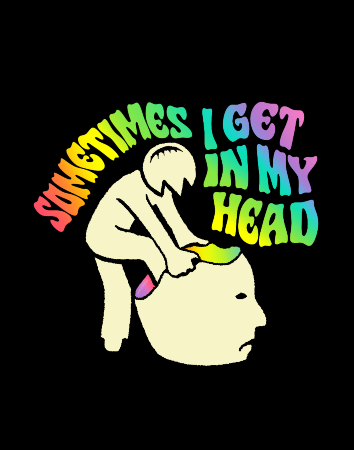
Sometimes I Get In My Head

sometimes I get in my head

I spend a lot of time in my head.

It’s so easy to get stuck in my mental space and not realize that what my head is saying is not always true, and is definitely not the whole story.

I try to analyze everything, play out every scenario and come up with the perfect blah for everything.

See, I couldn’t come up with the right word there, so I consciously decided not to get in my head and just put the word blah in, trusting you’d understand what I was getting at, because hey this art piece is about not getting in my head right?

Then I overexplained it, likely thoroughly losing you in the process.

Anyhow, this mental health art piece is a silly visual reminder of the silliness of spending too much time thinking and not enough time connecting with the rest of my body, feeling physical sensations, asking what my emotions are telling me, and being mindful and present. Because I’ve seen what it looks like when other people get stuck in their head and it looks pretty silly – usually involving a very still posture, creased eyebrows and a long rambling monologue.

Spending too much time in my head is one of my main sources of anxiety. That and too much technology. When I realize I am in my head the best things I can do is get some movement in, do some breathwork or a cold plunge (I love cold plunges).

I know I am not the only one who gets stuck in my head – this is one of my most popular art pieces. I’ve had people say they relate to it more than any of my other art prints.

So hey, if you can relate to this piece, know that you are not the only one who gets in your head about things, and that there is no shame in it. It’s a perfect opportunity to recognize it, and become more present and connected to the rest of your self.

Let me know what you think! I’d love your support if you’d like to buy a print here: Sometimes I Get In My Head, shoot me a comment, share, or link to my page!